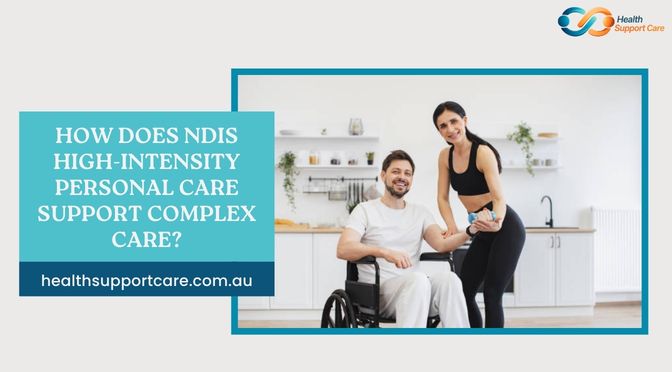
People living with significant disabilities may require more specialised personal care than standard daily assistance can provide. NDIS high-intensity personal activities are designed to support participants who have complex care needs and require assistance with personal activities that involve higher levels of skill, knowledge or experience.
For NDIS participants in Brisbane, understanding how this support works can help families and support coordinators make informed choices about appropriate care.
What Is NDIS High-Intensity Personal Care?
High-intensity personal activities are supports provided to NDIS participants who have complex health or personal care requirements. These activities may involve procedures or care tasks that require specific training and competency.
Depending on an individual’s needs and NDIS plan, high-intensity support can include assistance with complex bowel care, enteral feeding, catheter care, urinary management, subcutaneous injections and other specialised support.
The exact services provided should always be based on the participant’s individual needs, support plan and relevant clinical requirements.
How Does High-Intensity Care Support Complex Needs?
Complex care often requires more than routine assistance with showering, dressing or personal hygiene. A participant may need support with health-related routines that must be completed safely and consistently.
NDIS high-intensity personal care in Brisbane can provide trained assistance with these activities while helping the participant maintain dignity, independence and quality of life.
For example, a person who relies on enteral feeding may require assistance with their feeding routine, while another participant may require specialised bowel or catheter care. Appropriate support can help these essential routines become a safe and manageable part of everyday life.
What Types of Complex Care Can Be Supported?
High-intensity personal activities in Brisbane can cover different types of specialised support, depending on the participant’s circumstances.
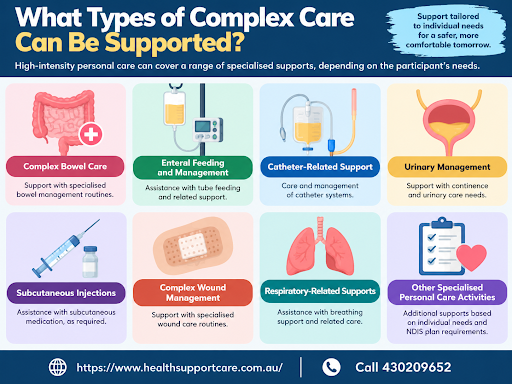
Examples may include:
- Complex bowel care
- Enteral feeding and management
- Catheter-related support
- Urinary management
- Assistance with subcutaneous injections
- Complex wound management
- Respiratory-related supports
- Other specialised personal care activities
Not every participant will require all these supports. Care should be tailored to the individual’s needs and delivered in accordance with applicable NDIS requirements and clinical guidance.
Why Trained Support Workers Matter
Complex personal care requires appropriate knowledge, training and competency. A support worker providing high-intensity care needs to understand the participant’s specific requirements and follow established procedures.
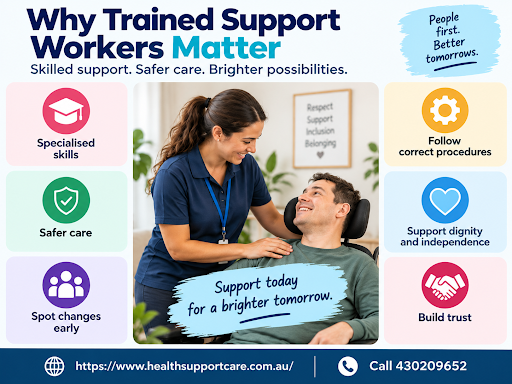
Training can help workers recognise potential concerns, follow infection-control practices, use equipment appropriately and respond according to the participant’s support arrangements.
Where a participant’s needs involve clinical risks, collaboration with relevant health professionals may also be important.
Supporting Dignity and Independence
High-intensity care is not only about completing medical or personal care tasks. The way support is delivered can have a significant impact on a participant’s comfort, privacy and sense of control.
Support workers can encourage participants to participate in tasks wherever possible, make choices about their routines and maintain their preferred methods of care.
This person-centred approach can help ensure complex support does not unnecessarily limit independence.
Consistency Can Make Daily Care Easier
Participants with complex needs may benefit from familiar support workers who understand their routines, communication preferences and care requirements.
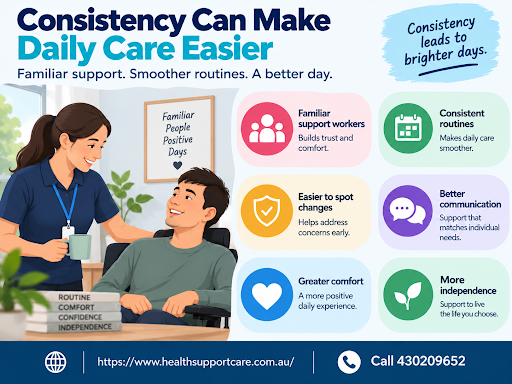
Consistent support can help reduce uncertainty and make personal care more comfortable. It can also help workers identify changes in a participant’s usual condition that may need to be communicated to the appropriate people.
Finding High-Intensity Personal Care in Brisbane
When choosing an NDIS provider in Brisbane, participants and their families should consider whether the provider has appropriately trained workers who can safely deliver the required high-intensity supports.
It is also useful to discuss the participant’s specific needs, preferred routines, communication requirements and availability before commencing services.
Supporting Complex Care With Confidence
NDIS high-intensity personal activities can provide essential assistance for participants whose personal care needs require specialised skills and knowledge. With appropriately trained workers and individualised support, participants in Brisbane can receive complex care while maintaining dignity, choice and as much independence as possible.
Get Personalised High-Intensity Care in Brisbane
If you or a loved one requires specialised personal care through the NDIS, choosing Health Support Care, an experienced NDIS provider can make everyday routines safer and more comfortable. Discuss your individual needs by calling 430209652today.
FAQs About How Does NDIS High-Intensity Personal Care Support Complex Care?
- What is NDIS high-intensity personal care?NDIS high-intensity personal care provides specialised assistance for participants whose personal care needs require additional skills, training or experience because of complex support requirements.
- What does high-intensity personal care include?Depending on the participant's needs, it can include support with complex bowel care, enteral feeding, catheter care, urinary management, subcutaneous injections and other specialised activities.
- Who can receive high-intensity personal care under the NDIS?Participants whose NDIS plan includes relevant supports and who have personal care needs requiring specialised assistance may be able to access high-intensity personal activities.
- Do support workers need special training for high-intensity care?Yes. Workers providing high-intensity supports need appropriate training and competency for the specific activities they undertake. Requirements can vary depending on the type of support.
- Can high-intensity personal care help participants maintain independence?Yes. Appropriate support can assist with essential care while encouraging participants to make choices, participate in their routines and maintain as much independence as possible.
- How can I find high-intensity NDIS personal care in Brisbane?Look for an NDIS provider with appropriately trained workers and experience delivering the specific high-intensity supports required. Discuss the participant's needs, routines and support preferences before commencing services.